
To continue with the definition I have P thru S to introduce to you today. We are almost done with this article and then on to bigger and better things
Panelboard. This holds the overcurrent devices. Well the breaker type. Also know as a electrical box.
“A single panel or group of panel units designed for assembly in the form of a single panel, including buses and automatic overcurrent devices, and equipped with or without switches for the control of light, heat, or power circuits; designed to be placed in a cabinet or cutout box placed in or against a wall, partition, or other support; and accessible only from the front. (CMP-9)”
Photovoltaic (PV) System. I enjoy this subject very much. I have discussion about this subject because I own a EV. Before owning a EV I owned a V-8 Jeep grand Cherokee. When I am asked if its worth it, I start by explaining if I still drove or even upgraded my Jeep my yearly expense on fuel would be about $3000 to $3500 per year and since I am an electrician and I am able to install solar systems I buy the equipment a panel at a time(Income tax check) and build out the system myself. Now if a 5 panel Panasonic solar system cost $3200 including micro inverts I get my money back in a year or two. More to come on this later.
“The total components and subsystem that, in combination, convert solar energy into electric energy for connection to a utilization load. (CMP-4)”
Plenum. Above a drop ceiling there is a space of air. This space is referred as the plenum, now we have wire that is rated for these areas which need to rated as such. More to come on this definition as we go through the code book.
“A compartment or chamber to which one or more air ducts are connected and that forms part of the air distribution system. (CMP-3)”
Portable Equipment. The code needs to cover this definition so people have a division of what is permanent installation and what portable can be.
“Equipment with electrical components suitable to be moved by a single person without mechanical aids. (CMP-14)”
Power Outlet. Anything that can safely bring electrical power from panel to a defined location(where power needs to be used).
“An enclosed assembly that may include receptacles, circuit breakers, fuseholders, fused switches, buses, and watt-hour meter mounting means; intended to supply and control power to mobile homes, recreational vehicles, park trailers, or boats or to serve as a means for distributing power required to operate mobile or temporarily installed equipment. (CMP-19)”
Premises Wiring (System). The code will cover as much as it can. And this is to important to pass up because. It’s 90% of what a town electrical inspector does, inspect residential wiring.
“Interior and exterior wiring, including power, lighting, control, and signal circuit wiring together with all their associated hardware, fittings, and wiring devices, both permanently and temporarily installed. This includes (a) wiring from the service point or power source to the outlets or (b) wiring from and including the power source to the outlets where there is no service point. Such wiring does not include wiring internal to appliances, luminaires, motors, controllers, motor control centers, and similar equipment. (CMP-1)
Informational Note: Power sources include, but are not limited to, interconnected or stand-alone batteries, solar photovoltaic systems, other distributed generation systems, or generators.”
Pressurized [as applied to Hazardous (Classified) Locations]. Gasoline does give up a vapor and this increases pressure. This is not the only liquid that does this. The code tries to cover all instances that this can cover.
“The process of supplying an enclosure with a protective gas with or without continuous flow, at sufficient pressure to prevent the entrance of combustible dust or ignitible fibers/ flyings. (CMP-14)”
Process Seal [as applied to Hazardous (Classified) Locations]. To separate with a seal so that there is no possible way for a spark to reach the other side of that seal. This explanation might be reaching but it’s as good as I can for today.
“A seal between electrical systems and flammable or combustible process fluids where a failure could allow the migration of process fluids into the premises’ wiring system. (CMP-14)”
Purged and Pressurized [as applied to Hazardous (Classified) Locations]. Used for chemical plant, natural gas, and fuel stations and other locations that by design need gases to vent out.
“The process of (1) purging, supplying an enclosure with a protective gas at a sufficient flow and positive pressure to reduce the concentration of any flammable gas or vapor initially present to an acceptable level; and (2) pressurization, supplying an enclosure with a protective gas with or without continuous flow at sufficient pressure to prevent the entrance of a flammable gas or vapor, a combustible dust, or an ignitible fiber. (CMP-14)
Informational Note: For further information, see ANSI/NFPA 496-2013, Purged and Pressurized Enclosures for Electrical Equipment.”
Qualified Person. A person that either by education or by experience(on the job training) or both.
“One who has skills and knowledge related to the construction and operation of the electrical equipment and installations and has received safety training to recognize and avoid the hazards involved. (CMP-1)
Informational Note: Refer to NFPA 70E-2012, Standard for Electrical Safety in the Workplace, for electrical safety training requirements.”
Raceway. Enclosures that allows conductors the proper route to and from equipment.
“An enclosed channel designed expressly for holding wires, cables, or busbars, with additional functions as permitted in this Code. (CMP-8)
Informational Note: A raceway is identified within specific article definitions.”
Rainproof. The ability to avoid water from entering an enclosures so that the equipment still runs.
“Constructed, protected, or treated so as to prevent rain from interfering with the successful operation of the apparatus under specified test conditions. (CMP-1)”
Raintight. This definition does not mean waterproof. Meaning can not be submersed. Enclosures(electrical boxes) can be outside but not in an area that will flood. It’s very similar to watches, some can go down to 50 feet of water and some can go 500 feet of water. And some can be taken showers but not submerged.
“Constructed or protected so that exposure to a beating rain will not result in the entrance of water under specified test conditions. (CMP-1)”
Receptacle. Normal every day outlets. Some are 15 amps, 120 volts single phase. Up to 60 amps, 277 volts 3 phase. All the voltages and amperages has different receptacle. Home Depot has a couple of these samples.
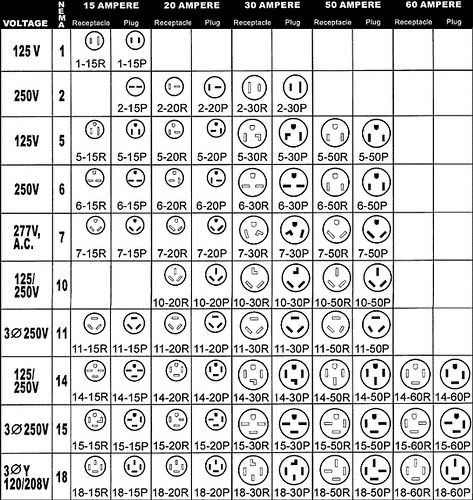
“A contact device installed at the outlet for the connection of an attachment plug
A single receptacle is a single contact device with no other contact device on the same yoke. A multiple receptacle is two or more contact devices on the same yoke. (CMP-18)”
Receptacle Outlet. Self explanatory.
“An outlet where one or more receptacles
are installed. (CMP-18)”
Remote-Control Circuit. When installing equipment that needs to controlled externally those control wires will need to run in separate conduits. Electricity has a mechanical property called inductive reactance. This allows transformers to manipulate voltages by bring in one voltage on one wire comes close to another wire and transfers the electro magnetic(voltage) force to another wire. Sorry about the rant.
“Any electrical circuit that controls any
other circuit through a relay or an equivalent device. (CMP-3)”
Retrofit Kit. When devices have aged to the point that it no longer efficient enough, instead of replacing the whole fixture, manufactures make kits able to transfer the old fixture to new.
“A general term for a complete subassembly of parts and devices for field conversion of utilization equipment. (CMP-18)”
Sealable Equipment. A lot of times we don’t want the general public asses to these pieces of equipment. Well for one it could be kids playing around right and it could be someone with nefarious intentions. Either way these sealable devices are great for out side use and lock official.
“Equipment enclosed in a case or cabinet that is provided with a means of sealing or locking so that live parts cannot be made accessible without opening the enclosure. (CMP-1)
Informational Note: The equipment may or may not be operable without opening the enclosure.”
Separately Derived System. Generators, solar panels, wind powered devices, hydro power. They all identify with this definition.
“An electrical source, other than a service, having no direct connection(s) to circuit conductors of any other electrical source other than those established by grounding and bonding connections. (CMP-5)”
Service. Where the power from the public utility comes from and terminates.
“The conductors and equipment for delivering electric energy from the serving utility to the wiring system of the premises served. (CMP-4)”
Service Cable. The wires that that serve the location.
“Service conductors made up in the form of a cable. (CMP-4)”
Service Conductors. From meter pan to the inside panel. When power needs to be interrupted by the fire dept they usually pull the meter from the meter pan.
“The conductors from the service point to the service disconnecting means. (CMP-4)”
Service Conductors, Overhead. In many places these wires are found above head and in some areas they can be found buried. Of course when these cables are buried the cost is substantial. Who picks up that initial cost is the public’s utility company, but those cost get past on to the consumer(us).
“The overhead conductors between the service point and the first point of connection to the service-entrance conductors at the building or other struc‐ ture. (CMP-4)”
Service Conductors, Underground. Again these systems are very expensive and many opt to go above ground. The state of Florida seems to install mostly underground and that is due to storms.
“The underground conductors between the service point and the first point of connection to the service-entrance conductors in a terminal box, meter, or other enclosure, inside or outside the building wall. (CMP-4)
Informational Note: Where there is no terminal box, meter, or other enclosure, the point of connection is considered to be the point of entrance of the service conductors into the building.”
Service Drop. The wires that bring power to your meter pan.
“The overhead conductors between the utility electric supply system and the service point. (CMP-4)”
Service-Entrance Conductors, Overhead System. The wires that come down to the first breaker in the panel.
“The service conductors between the terminals of the service equipment and a point usually outside the building, clear of building walls, where joined by tap or splice to the service drop or overhead service conductors. (CMP-4)”
Service-Entrance Conductors, Underground System.
“The service conductors between the terminals of the service equipment and the point of connection to the service lateral or under‐ ground service conductors. (CMP-4)
Informational Note: Where service equipment is located outside the building walls, there may be no service-entrance conductors or they may be entirely outside the building.”
Service Equipment. This brings power to the dwelling.
“The necessary equipment, usually consisting of a circuit breaker(s) or switch(es) and fuse(s) and their accessories, connected to the load end of service conductors to a building or other structure, or an otherwise designated area, and intended to constitute the main control and cutoff of the supply. (CMP-4)”
Service Lateral.
“The underground conductors between the utility electric supply system and the service point. (CMP-4)”
Service Point. So this is the metering pan, or dwelling that require more power that point is the main breaker in the panel.
Short-Circuit Current Rating. In plain terms when equipment experiences a short the over amperage(breaker, or fuse) trips. This is calculated by the equipment working and start up amperage.
“The prospective symmetrical fault current at a nominal voltage to which an apparatus or system is able to be connected without sustaining damage exceeding defined acceptance criteria. (CMP-10)”
Show Window. Interesting that this would show up here. This should be in the building code rather then the electrical code. Here lighting, power, display items like neon lights seem to come into question. There are building dept codes that prohibit usage of window displays that take too much attention.
“Any window, including windows above doors, used or designed to be used for the display of goods or advertising material, whether it is fully or partly enclosed or entirely open at the rear and whether or not it has a platform raised higher than the street floor level. (CMP-2)”
Signaling Circuit. From 6 volts DC to 480 volt AC this encompasses it all. This is mostly overseen by the under writers labs but when doing something that is getting inspected like generators that have an automatic transfer switch those devices operate the signal that starts and stops the generators and if they are not the right size they won’t pass inspection.
“Any electrical circuit that energizes signaling equipment. (CMP-3)”
Simple Apparatus [as applied to Hazardous (Classified) Loca‐ tions]. Here the code is trying to ignore the inspection of anything that dose not pose a threat to human life.
“An electrical component or combination of components of simple construction with well-defined electrical parameters that does not generate more than 1.5 volts, 100 mA, and 25 mW, or a passive component that does not dissipate more than 1.3 watts and is compatible with the intrinsic safety of the circuit in which it is used. (CMP-14)
Informational Note: The following apparatus are examples of simple apparatus:
(1) Passive components; for example, switches, junction boxes, resistance temperature devices, and simple semi‐ conductor devices such as LEDs
(2) Sources of stored energy consisting of single components in simple circuits with well-defined parameters; for exam‐ ple, capacitors or inductors, whose values are considered when determining the overall safety of the system
(3) Sources of generated energy; for example, thermocouples and photocells, that do not generate more than 1.5 volts, 100 mA, and 25 mW”
Special Permission. So in the United States when something becomes questionable a panel is formed and is ask to look at a set of plans that can be approved even if the building codes has rules to stop it from happening.
Stand-Alone System. A battery back up system, a generator, solar, hydro, wind are samples of this. I went through it before.
“A system that supplies power independently of an electrical production and distribution network. (CMP-4)”
Structure. In England it’s referred to as the brick and mortar. And it refers to a dwelling in general that house people and equipment weather it be for residential or commercial means.
“That which is built or constructed, other than equipment. (CMP-1)”
Surge Arrester. So this we see and should be installed anything that is powered by electricity that is worth any money. We install these devices to eliminate any chance of a surge of voltage going through these components in the house. This happens more than we think and normally we go on our marry way. But in this case a surge can happen anytime and can distroy equipment and be harmful.
“A protective device for limiting surge voltages by discharging or bypassing surge current; it also prevents continued flow of follow current while remaining capable of repeating these functions. (CMP-5)”
Surge-Protective Device (SPD). This could cause a fire or destroy devices that hold picture and other important information. A lot of times the companies that supply these devices can come with a warranty.
“A protective device for limiting transient voltages by diverting or limiting surge current; it also prevents continued flow of follow current while remaining capable of repeating these functions and is designated as follows:
Type 1: Permanently connected SPDs intended for installation between the secondary of the service transformer and the line side of the service disconnect overcurrent device.
Type 2: Permanently connected SPDs intended for installa‐ tion on the load side of the service disconnect overcurrent device, including SPDs located at the branch panel.
Type 3: Point of utilization SPDs.
Type 4: Component SPDs, including discrete components, as
well as assemblies. (CMP-5)
Informational Note: For further information on Type 1, Type 2, Type 3, and Type 4 SPDs, see UL 1449, Standard for Surge Protective Devices.”
Switch, Bypass Isolation. In the case of generators we need to disconnect the natural and hot leads from the service, this is done when the transfer switch switches over to the emergancy side. A lot more to talk about this later in my blogs.
“A manually operated device used in conjunction with a transfer switch to provide a means of directly connecting load conductors to a power source and of disconnecting the transfer switch. (CMP-13)”
Switch, General-Use. In terms of the code it seems they want to look at switches on the wall that hold an accessible amount of amperage that control lights, fan motors, etc….. Why lights? Well before the LEDs were a popular form of lighting we had incandescent. These lights would draw a lot more per lamp and this would cause switches to see failure.
“A switch intended for use in general distribution and branch circuits. It is rated in amperes, and it is capable of interrupting its rated current at its rated voltage. (CMP-9)”
Switch, General-Use Snap.
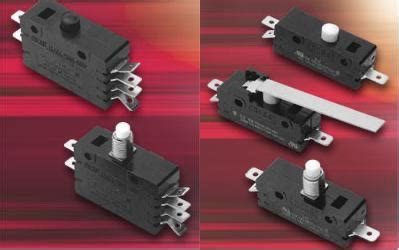
The illustration show different switches
“A form of general-use switch constructed so that it can be installed in device boxes or on box covers, or otherwise used in conjunction with wiring systems recognized by this Code. (CMP-9)”
Switch, Isolating.
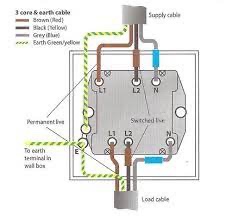
This does not allow the voltage to go though from anything source(power or neutral) and after
“A switch intended for isolating an electrical circuit from the source of power. It has no interrupting rating, and it is intended to be operated only after the circuit has been opened by some other means. (CMP-9)”
Switch, Motor-Circuit. So this is concerning when motors go into start up and we see a lot more amps until the motor stabilizes. It is a switch that has a time delay to allow electrician to look over the equipment.
“A switch rated in horsepower that is capable of interrupting the maximum operating overload current of a motor of the same horsepower rating as the switch at the rated voltage. (CMP-11)”
Switch, Transfer. Used in automatic and not automatic transfer switches.
“An automatic or nonautomatic device for transferring one or more load conductor connections from one power source to another. (CMP-13)”
Switchboard. A set of large breaker that can turn off the power.
“A large single panel, frame, or assembly of panels on which are mounted on the face, back, or both, switches, overcurrent and other protective devices, buses, and usually instruments. These assemblies are generally accessible from the rear as well as from the front and are not intended to be installed in cabinets. (CMP-9)”
Switchgear.
“An assembly completely enclosed on all sides and top with sheet metal (except for ventilating openings and inspection windows) and containing primary power circuit switching, interrupting devices, or both, with buses and connections. The assembly may include control and auxiliary devices. Access to the interior of the enclosure is provided by doors, removable covers, or both. (CMP-9)
Informational Note: All switchgear subject to NEC requirements is metal enclosed. Switchgear rated below 1000 V or less may be identified as “low-voltage power circuit breaker switchgear.” Switchgear rated over 1000 V may be identified as “metal- enclosed switchgear” or “metal-clad switchgear.” Switchgear is available in non–arc-resistant or arc-resistant” constructions.
 The Electrical Code
Leave a comment